Competition Gi vs Training Gi: What's the Difference?
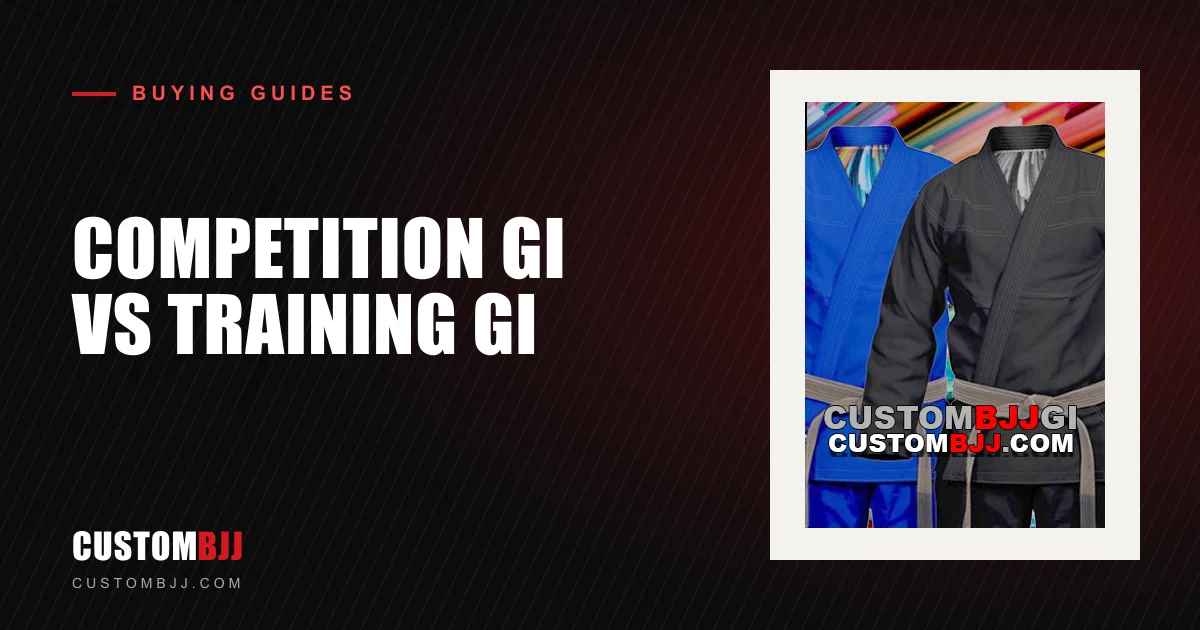
Walk into any academy and you'll see a mix of gis — some light and close-fitting, some thick and roomy. Broadly, they fall into two families: competition gis and training gis. Understanding the difference helps students buy the right gi and helps brands design the right line-up.
What makes a competition gi?
A competition gi is designed to give the athlete every legal advantage:
- Lighter weight — to help with weigh-ins, where in many events athletes weigh in wearing their gi.
- Closer cut — less excess fabric for an opponent to grip, while still meeting minimum sleeve and length requirements.
- Rule compliance — colours, lapel construction and patch placement that pass gi checks.
- Stiff, thick collar — harder for opponents to grip.
What makes a training gi?
A training gi is designed for hundreds of sessions and washes:
- Durability — heavier fabrics and reinforced stress points.
- Comfort — a slightly roomier cut for daily movement.
- Value — priced for regular replacement.
- Flexibility on rules — academies may allow colours or designs that wouldn't pass a competition gi check.
Side-by-side
| Competition gi | Training gi | |
|---|---|---|
| Weight | Lighter | Mid to heavy |
| Cut | Closer, minimal excess fabric | Roomier, comfort-focused |
| Durability | Good | Built for heavy use |
| Rule compliance | Essential | Optional (academy dependent) |
| Typical fabrics | Light pearl weave, ripstop pants | Pearl, gold or heavier weaves |
IBJJF competition requirements to know
Under IBJJF rules, a competition gi must:
- Be made of cotton or similar material, in good condition, and not excessively thick or hard.
- Be white, blue or black — without combining colours, such as a white jacket with blue pants.
- Have a jacket reaching the thighs and sleeves reaching the wrist with arms extended in front of the body, with at least 7 cm between the wrist and sleeve opening.
- Have a lapel 5 cm wide and no more than 1.3 cm thick.
- Have no pockets, no tears, and no painted designs (exceptions can be made for team competitions).
- Carry patches only in permitted locations on the jacket and pants.
Always check the current rules of the federation or event you're entering.
Which should your academy or brand offer?
- Academies often choose one versatile gi that's comfortable for training and legal for competition — a mid-weight pearl weave in white, blue or black with compliant patch placement.
- Brands often offer both: a light competition model and a durable training model, sharing design elements so the range feels consistent.
Designing both with CUSTOM BJJ
We manufacture custom gis designed around how they'll be used — with weave, cut, colours and decoration planned from the start. Tell us whether your gis are for competition, training or both in our quote form, or explore our custom BJJ gis.
Tags
Ready to manufacture with CUSTOM BJJ?
Tell us about your gis, rash guards or apparel and we'll reply with pricing, MOQ and manufacturing details.